
A South London community group is transforming how schools and community buildings access renewable energy through an innovative ‘lighting and solar as a service’ model.
SE24 – which stands for Sustainable Energy for South London – is a not-for-profit community benefit society which has spent the last decade helping local organisations cut energy costs while reducing carbon emissions.
Co-founder Alan Jones, who chaired SE24 for ten years before stepping back, explained how the model works. ‘Originally we started off focusing on community solar projects,’ he said. ‘As a community energy group, we carry out feasibility studies for community buildings—schools, churches, hospitals, community centres—and determine the viability of a project.’
SE24 then raises funding for viable projects through community share offers. ‘To date we’ve done five share offers and raised about half a million pounds,’ Jones said. ‘We’re in the middle of another share raise, planning to raise around £750,000 for ten projects—six solar, four LED.’
Once funding is secured, contractors install the systems, which SE24 maintains under long-term agreements. Solar installations typically run for 15 years, while LEDs have a ten-year contract.
‘On the solar side, we charge the site a preferential rate for energy—often 2/3 to 3/4 of market rates,’ Jones explained. ‘For LEDs, we share the savings with the site, covering our capital and maintenance costs over the contract period.’ Investors then receive a modest return, around 4 per cent for LED projects and up to 6 per cent for solar. After the contract ends, schools benefit from free energy for years.
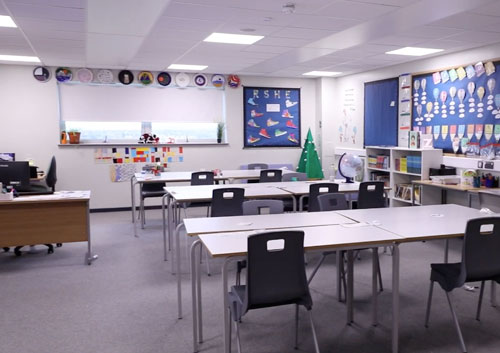
Jones highlighted the simplicity of LED projects. ‘Lighting projects are really a no-brainer. You can swap them out in two or three days with very quick payback and low maintenance. Some schools can save 50 per cent on their electricity bill,’ he said.
SE24 works closely with schools, conducting audits and using software like Retrolux to plan replacements room by room.
The benefits go beyond cost savings. ‘Improving lighting contributes to a better teaching environment, particularly for children with autism,’ Jones said. ‘Old flickering lights can affect concentration and behaviour. By accelerating the move to LED, we indirectly help raise educational standards.’
SE24 also ensures old installations are maintained. ‘We’ve repaired solar installations that had fallen into disrepair, bringing them back into use rather than letting them go to waste,’ Jones noted. Their O&M partner, Joju, provides 24/7 monitoring and repairs.
While government funding supports some solar projects, LEDs often require community backing. ‘Smaller LED projects sometimes need a bit of grant to be viable,’ Jones said, emphasising the community aspect. ‘People who invest become full members of SE24, having a stake in decarbonising their schools.’
Through its innovative model, SE24 is not only helping schools reduce energy costs and emissions but also giving local communities a direct role in driving sustainability. As Jones put it: ‘If you can influence kids through these projects, they in turn influence their parents—you get a multiplier effect.’
With its latest fundraising campaign, SE24 aims to extend its impact, bringing both solar power and energy-efficient LED lighting to more schools across South London, demonstrating a model that blends environmental, educational, and community benefits.
