
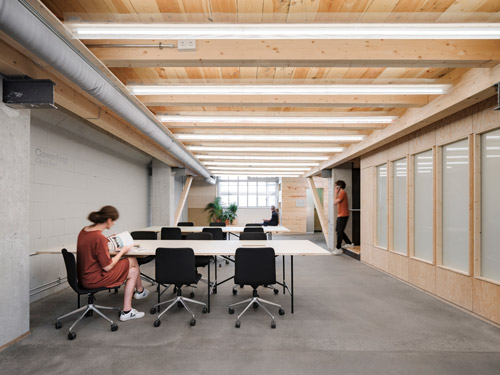
The lighting of a co-working space in Berlin has been designed to be circular and sustainable by acclaimed Belgian lighting designer Sabine De Schutter.
The lighting design practice Studio De Schutter has developed a sustainable lighting concept for the Impact Hub Berlin in the CRCLR House.
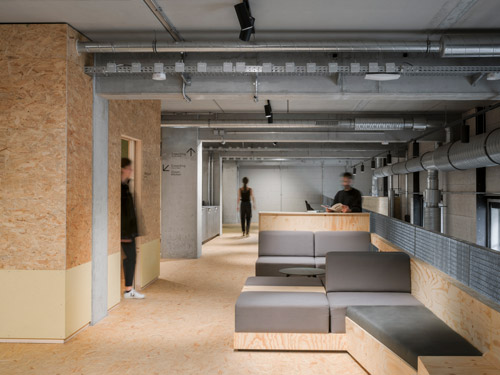
Based on principles such as circular design and cradle-to-cradle, it is not only a successful example of future-oriented construction but also reflects the attitude of the client.
The industrial charm of the building was retained throughout the design process. An open-plan structure creates a dynamic working environment, while at the same time providing ample retreats for concentrated work.
With reduced design elements, Studio De Schutter and the architects have succeeded in creating an inviting and user-friendly atmosphere that meets the requirements of a young and dynamic scene.
Around 70 per cent of the materials used are recycled, upcycled or sustainable.
The low prevalence of the circular approach in the construction industry led to a non-linear planning process that required Studio De Schutter to develop numerous ideas and undertake intensive research into suitable products from various sources.
In particular, sourcing leftover stock, low-cost but sustainable products and decommissioned but functional luminaires from other construction projects required extensive coordination beyond the usual catalogue selection. Despite the unconventional approach, Studio De Schutter was able to meet all relevant standards.
In the open-plan and individual offices on the ground floor, a balanced combination of direct and indirect lighting creates an even and glare-free atmosphere.
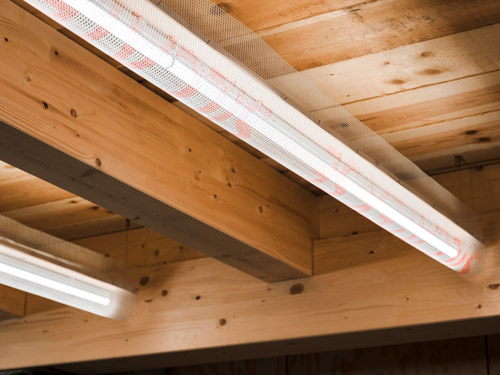
Here Studio De Schutter relies on so-called ‘lighting hacks’: price-optimised luminaires made up of standard components, yet individually tailored to the requirements of the project.
The linear lighting consists of recycled wooden slats, LED light strips for indirect lighting and diffuse light tubes, which the lighting designers have combined to create pendant luminaires.
In order to minimise the glare effect of the LED linear luminaires, Studio De Schutter covered the underside of this ‘light hack’ with an industrial fabric made of non-combustible material. Using samples and models, the designers tested different perforated materials and optimised light output and energy consumption.
Based on numerous daylight studies, the rooms on the upper floor are deliberately open to make the most of natural light. The results of the analyses also formed the basis for the grouping of luminaires into switching groups with timers, allowing demand-based control and leading to significant energy savings – an example of the holistic approach to lighting in this project.
 Another example of successful reuse is the former recessed luminaires, which now illuminate the mezzanine floor in a new function as surface-mounted luminaires, emphasising the characteristic atmosphere of the industrial building.
• Sabine De Schutter, left, is one of the keynote speakers at Circular Lighting Live 2026, Recolight’s flagship conference and exhibition, which takes place on Thursday 8 October 2026 at the Minster Building in the City of London.
In a presentation titled ‘Beyond fast lighting’ De Schutter will discuss her work, her philosophy and why the lighting industry needs to change.
Free to specifiers, Circular Lighting Live 2026 will feature leading experts, specifiers and policy makers who will share their insights into forthcoming standards and legislation, emerging technologies and new business models. More info: www.circularlighting.live
