
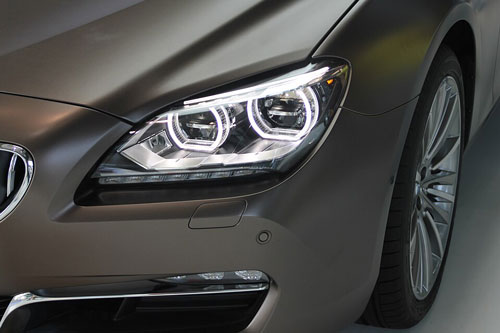
A new research project involving Covestro, BMW and automotive lighting supplier Forvia Hella aims to develop more recyclable lighting components, using automated dismantling and digital product data to help recover valuable materials at end of life.
The Kollekt project brings together industrial partners and research organisations to investigate how automotive lighting, mechatronic and electronic components can be designed for circularity. It is supported by Germany’s federal government through the CircularGlowUp funding framework.
Automotive lighting presents a particular challenge for recycling. Headlamps combine plastics, electronics, optical components and other materials in compact assemblies engineered to withstand demanding operating conditions. Separating these materials at end of life can be difficult, limiting opportunities to recover them for use in new products.
The project aims to address this problem by developing components that are easier to dismantle and recycle while retaining the performance required for modern vehicles. Covestro is contributing its expertise in high-performance polycarbonate, a thermoplastic widely used in lighting applications because of its optical properties, durability and design flexibility.
The consortium is also investigating artificial-intelligence-assisted robotic dismantling and digital product twins. Automated dismantling could help separate components more consistently, while digital product information could identify the materials used in individual parts and guide their recovery.
The ultimate objective is to establish processes capable of keeping more material within productive use, reducing demand for virgin resources and limiting waste.
The project is scheduled to run for three years. Its findings could have implications beyond automotive lighting, particularly as manufacturers across the wider lighting industry face growing pressure to demonstrate product repairability, recyclability and responsible material use.
However, designing a component to be recyclable does not guarantee that it will be recycled in practice. Collection systems, dismantling costs, material purity and the availability of markets for recovered plastics will all influence whether the approach can be deployed commercially at scale.
The project therefore provides an opportunity to examine how product design, automation and material science might work together to make circularity more practical in complex lighting products.
• Diary date: Circular Lighting Live 2027 takes place on Thursday 7 October 2027 in the City of London. It’s Recolight’s flagship event, comprising a two-track conference, exhibition and awards celebrating innovations in sustainable lighting.
