
Lighting design practice Zenisk has pledged to make all its projects circular and zero-carbon by 2030, setting out a strategy that combines luminaire reuse and refurbishment with energy efficiency, social wellbeing and measures to reduce light pollution.
It’s believed to be the first such practice in the world to make such a promise.
The Norwegian practice says it is embedding sustainability into all its lighting design work, supported by a set of dedicated services and an assessment tool developed in-house to evaluate the environmental impact of design and technical decisions.
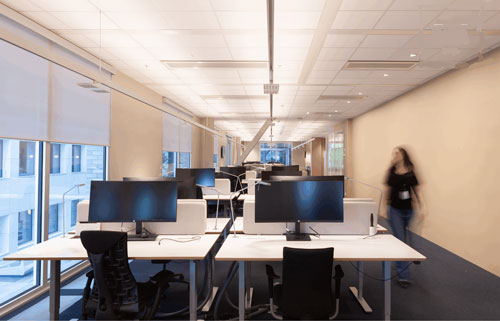
As part of its commitment, Zenisk has rehabilitated 2,000 luminaires salvaged from an office lighting refurbishment project, rather than allowing them to be sent to landfill.
The luminaires have been upgraded with new LED light sources and given a renewed warranty, extending their useful lives while reducing waste and the carbon footprint associated with replacing them.
The project also has a social dimension. Zenisk worked with an organisation providing employment and training opportunities for people seeking a fresh start in working life.
The collaboration, the practice says, has helped establish relationships that support longer-term social inclusion alongside the environmental benefits of reuse.
‘Light with a new lease on life’ is how Zenisk describes the initiative, which it regards as a practical demonstration of its circular economy ambitions.
The practice says it struggled to find suitable software to assess the sustainability implications of the choices routinely made during lighting design.
In response, it developed its own tool, SAVED, which it uses across all its projects to evaluate options and measure sustainability parameters.
Zenisk’s sustainability manifesto is built around four pillars: social good and wellbeing, circularity of lighting, energy saving and light pollution.
The practice says its approach goes beyond conventional lighting calculations, considering how schemes can make buildings and cities more inclusive, safe, healthy and resilient.
Its human-centric design principles include improving quality of life and visual comfort, supporting mood and motivation, and accounting for the circadian rhythms of both people and animals.
On circularity, Zenisk argues that the industry must move away from a model in which products are discarded simply because replacement is cheaper than repair. Its work includes advising on luminaire repair, reuse and retrofit, as well as alternative commercial arrangements such as buy-back schemes and Lighting as a Service (LaaS).
These approaches aim to keep products and materials in use for longer while encouraging clients to consider the environmental consequences of procurement decisions alongside initial cost.
The practice’s 2030 pledge brings these strands together, placing circularity alongside carbon reduction and wider environmental and social responsibilities.
The refurbishment of the 2,000 luminaires represents a step towards that ambition. Zenisk says its ultimate goal is for every project it undertakes to be circular and zero-carbon by the end of the decade.
- Diary date: Circular Lighting Live 2027 takes place on Thursday 7 October 2027 in the City of London. It’s Recolight’s flagship event, comprising a two-track conference, exhibition and awards celebrating innovations in sustainable lighting.
