
Sustainable business models focusing on the reuse, remanufacture and leasing of luminaires are emerging as the drivers of circularity in the lighting industry.
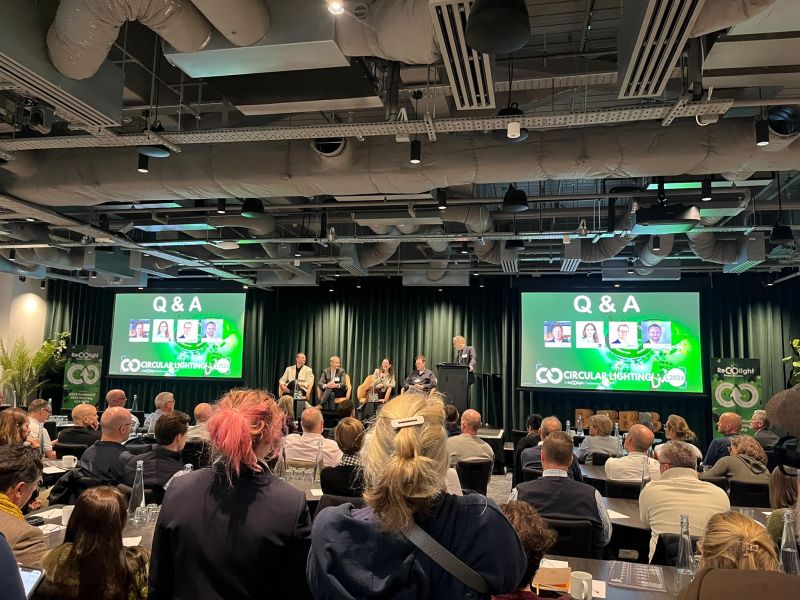
This was the key takeaway from last week’s Circular Lighting Live 2026 conference in London.
Organised by environmental compliance body Recolight, the event featured case studies and initiatives where light fittings were retained and refurbished rather than replaced with new products.
Speakers candidly outlined their successes and challenges in making innovative circularity strategies work in the real world.
The most mature of these sectors, remanufacturing, has been around for decades but in recent years has grown due to high energy costs and the phase-out of fluorescent light sources. Recolight unveiled its own initiative at the event, Recolight Revive, a specialist remanufacturing service which will upgrade and re-warranty lights to keep them from landfill.
Matt Robinson of Circle Construct and Miles Cantley of Mount Lighting explored the emerging market for luminaire leasing in Cat A commercial fit-outs. Rather than purchasing fittings for temporary installations, developers could lease them and return them for reuse when a building is fitted out for its occupier. The approach offers the potential to reduce both waste and costs, while retaining the value of products that might otherwise be discarded.
However, the conference heard that recovering luminaires for reuse is not simply a matter of removing them from a ceiling and finding a new buyer. Hattie Emerson of the Finishes and Interiors Sector shared lessons from attempts to redistribute thousands of good-quality fittings removed during Cat A fit-outs, highlighting the practical obstacles to creating a functioning market for second-hand products.
The programme also examined how circularity can be incorporated into new projects. At Leadenhall Market in London, Light Projects Evolve remanufactured historic fittings and developed a bespoke LED light source to preserve the building’s Victorian character. Elsewhere, DRK Lighting presented the remanufacture of 8,000 luminaires at BP’s ICBT, demonstrating the potential to apply circular principles at scale.
The wider programme addressed the implications of embodied carbon, material selection and forthcoming regulation. Speakers examined Environmental Product Declarations (EPDs), updates to the TM66 circularity metric and legislation expected to place greater emphasis on product repairability and upgradeability.
In a keynote, John McRae, director of architectural practice Orms, challenged the industry to imagine a future beyond the conventional take-make-use-waste model. Sabine De Schutter, founder of Studio De Schutter, argued that reuse and upcycling could become starting points for creative lighting design rather than constraints.
The event also explored lower-impact materials and manufacturing, including bio-based plastics and robotic additive manufacturing using recycled materials.
Together, the presentations pointed to a shift in how the industry might design, procure and manage lighting: preserving the value of existing products, extending their useful lives and developing commercial arrangements that make circularity viable.
‘I first attended circular lighting live four years ago and have watched as the lighting industry has started its journey into reducing waste, remanufacturing fittings and redefining its business as usual,’ said McRae.
‘This year’s conference was a step change towards a more circular approach where speakers shared their innovation and lessons learned. The industry has been guilty of an addiction to selling new but this year disassembly and take back schemes were amongst the examples shared.
‘It’s clear that making the business model work is challenging at this stage but there was lots of great examples on show and the passion to do the right thing was clear to all of us that attended.
‘The future of lighting is not brighter. It is wiser.’
Alexander Flekler from Wago said the event left him feeling inspired. ‘What really opened my eyes was just how active the reuse and refurbishment scene within the UK lighting industry is. I honestly didn’t expect to see so many real projects and practical examples of circularity already happening.’
The conference was held at the Minster Building in the City of London on 8 October, alongside the Build Back Better Awards 2026, which recognised innovation and environmental leadership in lighting.
Reuse, remanufacture and leasing emerge as drivers of lighting circularity

Ray Molony
Recolight Report is an independent guide to the latest developments in sustainable and circular lighting. Learn about the people, products, projects and processes that are shaping our industry’s low carbon future. Plus: explainers on the latest innovations, opinion from thought leaders and video interviews with leading disruptors. Edited by lighting expert, editor and industry figure Ray Molony.